Take a breath.
Your lungs will quietly and automatically repeat that job more than 20,000 times today, mostly without you noticing. What has changed in recent years is what's in the air your lungs are working with.
Between longer wildfire seasons and increased levels of urban smog, air quality has become a mainstream wellness conversation. The good news: from the air you filter to the food on your plate, there's a lot within your control when it comes to respiratory health.
How Does Air Pollution Affect Respiratory Health?
Air pollution is a mix of gases and microscopic particles that can be caused by vehicle exhaust, industrial emissions, dust and smoke. The particles researchers watch most closely are called PM2.5: fine particulate matter that the U.S. Environmental Protection Agency notes is roughly 30 times smaller than the width of a human hair, small enough to bypass the body's natural filters and travel deep into the lungs.
Scientists studying air pollution health outcomes have observed that long-term exposure is associated with oxidative stress, an imbalance between free radicals and the antioxidants that help neutralize them. That's one reason public health agencies encourage checking the local Air Quality Index (AQI) as routinely as the weather.
What Are the Risks from Wildfire Smoke?
Wildfire smoke deserves its own conversation because it behaves differently from everyday pollution. It arrives suddenly, in high concentrations and can travel hundreds of miles. You don't even have to live near a fire to experience hazy skies and that telltale campfire smell.
The risks from wildfire smoke stem largely from the same fine particles found in urban pollution, but in denser, more variable form. During smoke events, people commonly report irritated eyes, a scratchy throat, and general respiratory fatigue.
What Can I Do to Support My Lung Health During Wildfire Season?
A few practical habits can make the wildfire season far more manageable:
- Monitor before you move. Free tools like the EPA and NOAA AirNow Fire and Smoke Map show real-time AQI readings, so you can plan workouts, errands and outdoor time around cleaner windows.
- Create a clean-air room. The EPA suggests that a portable air cleaner with a HEPA filter in the room where you spend the most time can reduce indoor particle levels. If you use central air, check whether your system accepts a high-efficiency (MERV 13) filter.
- Stay hydrated. Water helps keep the mucous membranes lining your airways moist, part of your body's first line of defense against airborne particles.
Can Nutrition Help Support Respiratory Health?
While no single food or nutrient can undo the effects of smoke or air pollution. Nutrition is a natural part of any conversation about long-term wellness.
A common thread in health research is the role of antioxidants. compounds the body uses to help balance free radical activity. Eating patterns rich in colorful produce, herbs and whole foods tend to be higher in these compounds, which is why they come up often in general discussions of everyday wellness. The familiar takeaway holds true: a varied, nutrient-dense diet is part of a healthy lifestyle that supports the body as a whole.
Which Nutrients Support a Healthy Immune Response to Environmental Stressors?
A few nutrients and botanicals come up again and again in this conversation:
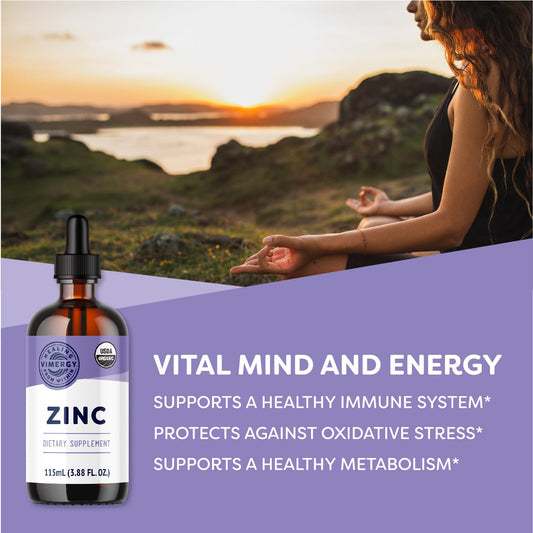
- ZINC - Zinc is one of the most-studied minerals in immune research. Zinc appears in many wellness routines during seasons of environmental challenge.*
- MULLEIN & THYME - Mullein and thyme are herbs with centuries of traditional use, historically enjoyed as soothing teas. Today, herbalists still reach for them when thinking about seasonal wellness routines.*
For those who want a simple way to bring these ingredients together, VIMERGY Total Immune Blend* combines liquid zinc with extracts of organically grown mullein and thyme in one fast-absorbing, liquid, an easy addition to a broader lifestyle built on clean air habits and nutrient-dense eating. *
You can't control the air outside your window, but you can control how you respond to it: check the AQI, filter your indoor air, move wisely and nourish yourself well. Respiratory health, like most of wellness, is less about a single fix and more about small, consistent choices, made one breath at a time.